parkverdict
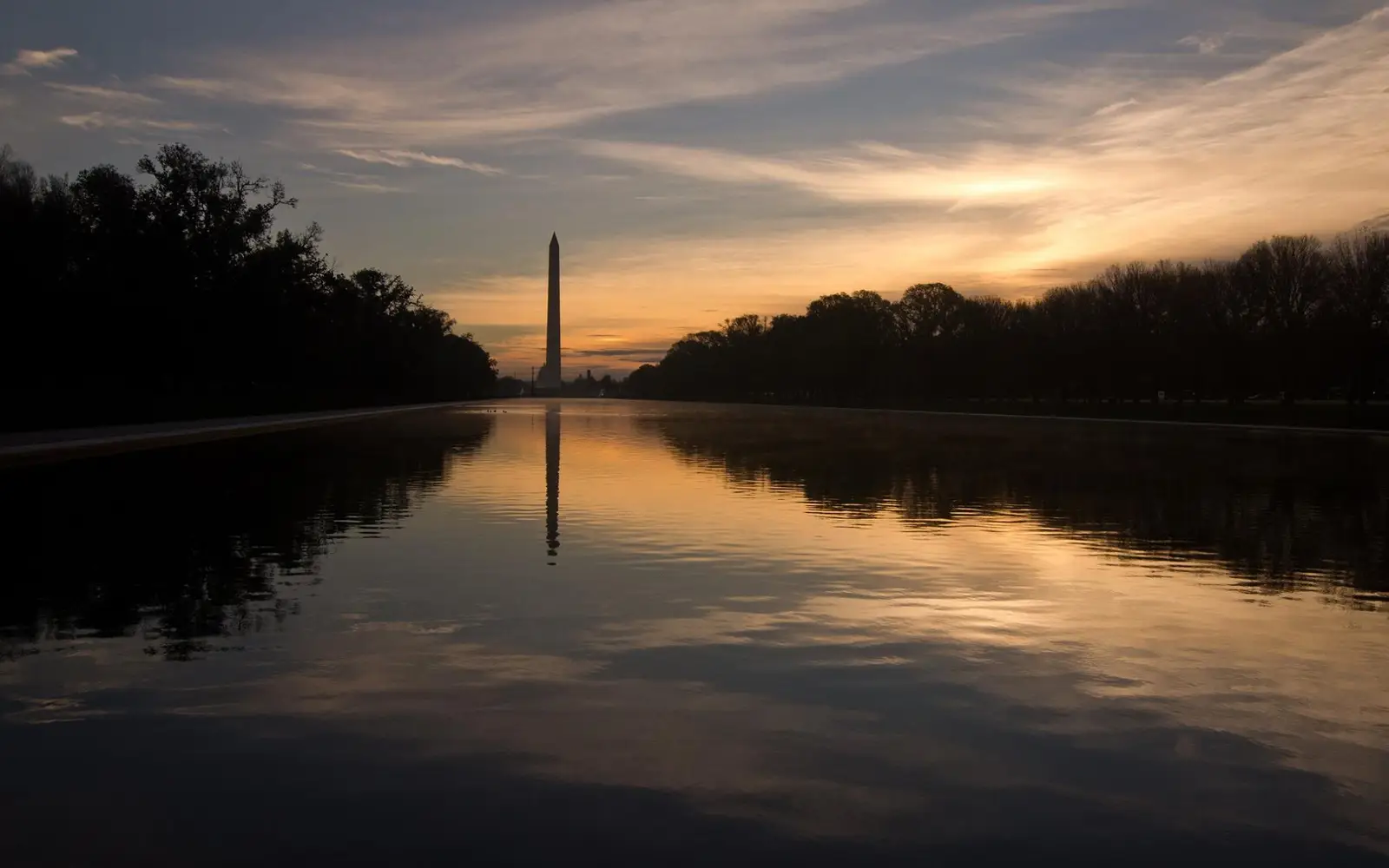
Washington Monument at DuskAerial View of the Washington MonumentWashington Monument FlagThe Washington Monument, a white marble obelisk, towers above a ring of US Flags.

Washington Monument

Yes, the Washington Monument is worth visiting for families seeking a structured, brief activity with a clear reward and for history enthusiasts. Travelers prioritizing outdoor adventure, extensive hikes, or natural scenery should look elsewhere.

ParkDC
NPS / NPS Photo
The bottom line

Washington Monument: our verdict

The Washington Monument, a 555-foot marble obelisk, physically dominates the National Mall skyline.
31/ 100FOCUSED
parkverdict Experience ScoreIndependent, not sponsored

31 of 100. Our independent breadth-and-access index. How we score

The experience is brief and tightly structured. Visitors ride to the top, take in panoramic views of Washington D.C., and descend. There is no hiking, wildlife, or sprawling landscape here. A guided tour provides historical context on George Washington and the monument's construction. The Junior Ranger Program offers families a structured engagement point. At $1 entry, the price-to-payoff ratio is strong for this offering. This is not a park visit in the traditional sense. It is a landmark experience embedded within a broader National Mall day. It earns its place on any Washington D.C. itinerary, but it is not a destination unto itself.

Why visit

The National Mall offers a rewarding half-day experience focused on the Washington Monument. A guided tour provides insight into the monument's construction history, the subtle shifts in its marble, and its significant place in American civic identity. Ascending to the observation level delivers a 360-degree aerial panorama of Washington D.C., an essential perspective for understanding the city's layout. For younger visitors, the Junior Ranger Program provides an interactive engagement with the monument. Quality interpretive materials are available at the bookstore and park store. This destination pairs well with other monuments on the Mall for a full day of exploration.

Who it suits

Families seeking a structured, brief activity with a clear reward will find this destination most suitable. History enthusiasts have a meaningful stop here. Travelers prioritizing outdoor adventure, extensive hikes, or natural scenery should bypass it entirely.

Timing your visit

Spring, from March through May, presents the most favorable conditions. Temperatures remain mild, and the cherry blossoms on the Mall offer a notable scenic enhancement. Humidity has not yet become a factor. Fall provides a comparable level of comfort for visitors. Summer introduces consistent heat and humidity, rendering extended outdoor walks on the Mall genuinely challenging. The monument's interior maintains climate control, making the season primarily relevant for the duration of time spent in outdoor queues.

What stands out

  • Panoramic aerial views of Washington DC from the 555-foot observation level
  • Guided tours that cover the monument's construction history and George Washington's legacy
  • Junior Ranger Program for structured family engagement
  • One of the lowest entrance fees in the National Park System at $1
  • Bookstore and park store with interpretive materials on American history
  • Self-guided walking option for flexible, independent visitors

Good to know

Entry is a nominal $1, but timed-entry passes are required and can book up rapidly, particularly in spring and summer. The monument closes July 4 and December 25. The final tour commences by 4:00 p.m., with a 5:00 p.m. closing. Early arrival or advance pass booking is essential. Its location on the National Mall means parking is severely limited. Public transit or walking from nearby Metro stops offers the most practical access.

Insider tipBook timed-entry passes well in advance for peak spring and summer. Same-day availability is rare. Forgo a guaranteed entry slot, and an August wait on the Mall becomes a frustrating start to a DC day.

How we scored it

Behind the 31

The number is not a mood. It is a few things we can actually check in public records, added up and capped so no single one runs away with the total. It tracks how much a place has going on and how easy it is to reach, and nothing about scenery or crowds. Here is what added up to 31:

Activities5 of 20Topics4 of 12Official photos5 of 5CampingnoneFree entryno
Each bar is the documented input against the cap the formula applies to it, so a full bar means the cap is reached, not that the place is better. Where the count exceeds the cap, only the cap counts.
  • Activity breadth5 documented activities
  • Topic breadth4 topics
  • Official imagery5 public-domain images
  • Camping on sitenone recorded
  • Entry cost$1

No number is hand-adjusted and no unit pays for placement. The full weights, the floor at 18 and a worked example are on how we score.

The honest limits

Where the score goes quiet

One limit to keep in mind. Everything here comes from public records on what a unit documents and how reachable it is, so the score cannot judge beauty, crowds, trail conditions, weather, or how good any single program is. That is exactly why a small, specific place can score below a sprawling park and still be your better trip. Take the number as a like-for-like look at what is on paper, and lean on the verdict for the human read.

Sources

Sources and corrections

Everything factual on this page traces back to a public record. Here is where it came from and when we last pulled it.

Things to do

What it offers

Guided ToursSelf-Guided Tours - WalkingJunior Ranger ProgramShoppingBookstore and Park Store
Overview

About Washington Monument

The 555-foot marble obelisk towers over Washington, D.C. It was built to honor George Washington, the United States' first president.

On documented breadth and access, Washington Monument ranks 24th of 24 park and public-land units we score in District of Columbia.

Climate note

Washington, DC has four distinct seasons. Humidity affects how temperatures feel, making summer days seem hotter and winter days colder. Spring, from March to May, sees an average high of 65.5 degrees and a low of 46.5 degrees. Summer runs from June to August. Average summer highs reach 86 degrees, with lows around 68.5 degrees. Fall covers September through November. During these months, the average high is 68 degrees and the low is 51.5 degrees. Winter occurs from December to February.

Common questions

Washington Monument: quick answers

Is Washington Monument worth visiting?

Yes, the Washington Monument is worth visiting for families seeking a structured, brief activity with a clear reward and for history enthusiasts. Travelers prioritizing outdoor adventure, extensive hikes, or natural scenery should look elsewhere.

Is Washington Monument free to visit?

Not free. Getting in runs about $1.

What is Washington Monument best for?

It leans hardest toward good with kids, guided tours, going by the 5 activities it actually documents.

When is the best time to visit Washington Monument?

Spring, from March through May, presents the most favorable conditions.

How is the Experience Score for Washington Monument calculated?

The 31 comes straight from public data on how much the place documents and how easy it is to reach, things like activities, topics, photos, camping and whether entry is free. It says nothing about scenery or how busy it gets.